Data-Driven
Life Sciences
A hands-on course where you master the AI tools, data science workflows, and biological reasoning skills that are reshaping how science is done — and how researchers stay competitive.
You're Graduating Into a Different World
Every decade, a shift in tools changes how knowledge workers operate. The current shift is the biggest yet — and it's happening right now.
How Biological Research Has Evolved
The scientific method itself is being transformed — from a purely human-driven process to one where AI plays an increasingly central role in every step.
Where Biology Meets Computation
Modern biology generates more data than any human can process. Data-driven life sciences is the discipline of using machine learning, AI, and computational methods to extract meaning from this data — and to make discoveries that would be impossible otherwise.
Each week brings a new domain, taught by leading researchers from SciLifeLab and KTH.
Learning, Augmented by AI
Every week combines expert knowledge with AI-assisted hands-on practice — the same workflow you'll use in your research career.
What Past Students Built
The final project is 3 weeks of building something real — AI-powered tools, web apps, and research demos used by actual labs.
Explore top courses
Final Project
A real client with a real biological problem. You find them, we approve the project, and you have about three weeks to hand back something that works.
📊 HT 2026: Data-Driven Life Sciences
Course content for the 2026 Data-Driven Life Sciences (DDLS) course.
Course Schedule
Important Dates Course period: 24 August – 23 October 2026 (Autumn 2026, Period 1, 50% pace) First lecture: Tuesday 25 August 2026, 10:00–12:00 Teaching period (6 modules): 25 August – 2 October 2026 Final project period: late September – 23 October 2026 — find a client now, see the Final Project page Final-project drop-in (optional): Tuesday 20 October 2026, 13:00–16:00 — online on the same Zoom; drop by any time in the window with any unanswered question about the final project, whether organisational, about working with the Pi agent, or specific to your own project Deadline for researchers to sign up a project: Friday 25 September 2026 — the public call Oral presentations (Master’s students): Friday 6 November 2026, 10:00–12:00 (10 min talk + 5 min Q&A, online on the same Zoom) Final-project help session (in person): Tuesday 27 October 2026, 10:00–12:00 at SciLifeLab, Tomtebodavägen 23, Solna All live sessions are held online on the same Zoom meeting all term: https://kth-se.
Module 3 - Precision Medicine and Systems Biology
Module week: Week 37 (starting 8 September 2026) Recorded lecture — now available online. Watch it in the course portal. The computer lab (Wednesday 13:00–17:00) and seminar (Friday 10:00–12:00) are held live over Zoom.
Module 5 - Single-cell Transcriptomics and Genomics
Module week: Week 39 (starting 22 September 2026) Recorded lecture — now available online. Watch it in the course portal. This module’s lecture is “Single Cell Analysis” from MIT’s Machine Learning in Computational Biology (MLCB, Fall 2024) by Prof.
Prerequisites
What this course expects This course trains a single skill: taking someone else’s biological problem, interviewing them until the question is precise, then directing and verifying an AI agent that does the analysis for you.
Module 6 - Automated Scientific Discovery and AI Agents
Module week: Week 40 (starting 29 September 2026) Recorded lecture — released online at the start of the module week, plus a 1-hour live lecture on Tuesday 29 September 2026, 10:00–11:00 CEST to introduce and announce the final project.
Module 1 - Introduction to Data-Driven Life Sciences
Module week: Week 35 (starting 25 August 2026) Lecturer: Wei Ouyang (Assistant Professor at KTH; DDLS Fellow) Live introduction on Zoom — Tuesday 25 August 2026, 10:00–12:00 CEST. Module 1 is delivered live to open the course; the recorded lectures for the following modules are released at the start of each module week (see the schedule).
Module 4 - Protein Structure and Molecular Biology
Module week: Week 38 (starting 15 September 2026) Guest lecturer: Patrick Bryant (Assistant Professor at Stockholm University & DDLS Fellow) Recorded lecture — now available online. Watch it in the course portal.
Module 2 - Image Analysis and Microscopy
Module week: Week 36 (starting 1 September 2026) Lecturer: Estibaliz Gómez de Mariscal (EMBO Postdoctoral Fellow, Optical Cell Biology Group, ITQB NOVA, NOVA University of Lisbon, Portugal) Recorded lecture — now available online.
Prerequisites
Be prepared As prerequisites for the course, we recommend becoming familiar with the following: Browse the SciLifeLab Data-Driven Life Science (DDLS) initiative to understand national priorities and the concept of the data life cycle, which is central in this course.
Module 1 - Introduction to Data-Driven Life Sciences
Start date: Week 35 (26th August 2025) Lecturer: Wei Ouyang (DDLS Fellow; Tuesday 26th August 13:00-15:00 CEST) Module 1 serves as the foundational introduction to the Data-Driven Life Sciences (DDLS) course.
Final Project — Exploring and Modeling Life Science Data with AI Agents
⚠️ Note: This is a draft project plan. Details (including deadlines, deliverables, and evaluation criteria) may change. Updates will be announced on the course website and in class. Welcome to the final project of DDLS 2025.
Module 2 - Image Analysis and Microscopy
Start date: Week 36 (2nd September 2025) Lecturer: Estibaliz Gómez de Mariscal (Postdoc at Instituto de Tecnologia Química e Biológica António Xavier (ITQB NOVA), NOVA University of Lisbon, Portugal; Tuesday 2nd September 13:00-15:00 CEST) Estibaliz Gómez de Mariscal completed her PhD in Mathematical Engineering in 2021 and is currently an EMBO Postdoctoral Fellow in the Optical Cell Biology Group at Instituto de Tecnologia Química e Biológica António Xavier (ITQB NOVA), NOVA University of Lisbon, Portugal.
📊 HT 2025: Data-Driven Life Sciences
Course content for the 2025 Data-Driven Life Sciences (DDLS) course.
Module 5 - Precision Medicine and Systems Biology
Start date: Week 39 (23rd September 2025) Module 5 focuses on clinical applications of AI and machine learning with an emphasis on multi-omics integration, biomarker discovery, and clinical data analysis. The module highlights how biologically informed models and novel machine learning methods can advance personalized medicine, cancer genomics, and systems biology modeling.
Course Schedule
Important Dates: Application closes: Aug 25, 2025, 24:00 CEST First lecture: Aug 26, 2025, 13:00 CEST Final Project plan submission deadline: Oct 6, 2025 Final Project: Oct 6-29, 2025 Final Project consultation 1: Oct 8, 2025, 13:00-14:00 Final Project consultation 2: Oct 20, 2025, 13:00-14:00 Final Project report submission deadline: Oct 29, 2025, 23:59 Oral Presentation (only for master’s students): Oct 31, 2025, 9:00-12:00 Lectures, computer labs and seminars will be held online via Zoom.
Module 3 - Protein Structure and Molecular Biology
Start date: Week 37 (9th September 2025) Speaker 1: Patrick Bryant (Ass. Prof. at SU & DDLS Fellow) Patrick Bryant’s research seeks to answer questions about the evolution of proteins and how this information can be used to create a new range of AI tools.
Module 4 - Single-cell Transcriptomics and Genomics
Start date: Week 38 (16th September 2025) Lecturer: Xiaojie Qiu Lecture: Tuesday, 16 September 2025 — 08:00 CET (Pacific Time: Monday, 15 September, 11:00 PM) Module 4 covers genomics and single-cell analysis featuring scRNA-seq processing pipelines, pathway analysis, and genomic workflows.
Module 6 - Automated Scientific Discovery and AI Agents
Start date: Week 40 (30th September 2025) Module 6 focuses on automated scientific discovery and AI agents. You will learn how to design, build, and evaluate agentic workflows that plan experiments, orchestrate tools and data pipelines, and interface with lab automation.
Course Schedule
Important Dates: Application open: June 5th, 2024 Application closes: Aug 19, 2024 First lecture: Aug 27, 2024, 08:00 CEST Hackathon: Oct 9-11, 2024 Final Project: Oct 7-27, 2024 Final Project consultation: Oct 17, 08:00-11:00 CEST Final Project Report submission deadline: Sunday, Oct 27, 2024, 23:59 CEST Oral Presentation (batch 1): Tuesday, Oct 29, 2024, 8:00-10:00 CEST (only for Master’s students) Oral Presentation (batch 2): Wednesday, Oct 30, 2024, 8:00-10:00 CEST (only for Master’s students) Lectures, Computer Labs, and Journal Clubs will be held online via Zoom.
Final Project
Start date: Week 41 (7th October 2024) Final Project The final project allows students to showcase their learning by proposing their own dataset and project idea. This open-ended assignment encourages participants to explore topics of interest within data-driven life science and apply the skills gained throughout the course individually or in a pair (both members should be at the same level, e.
Module 3 [1 ECTS] - Bioinformatics and Metagenomics
.profile-photo { width: 150px; /* Adjust the width as needed */ height: auto; /* This keeps the aspect ratio of the image */ display: block; margin-left: auto; margin-right: auto; } Start date: Week 37 (10th September 2024)
Module 4 [1 ECTS] - AI in Bioimage Analysis
.profile-photo { width: 150px; /* Adjust the width as needed */ height: auto; /* This keeps the aspect ratio of the image */ display: block; margin-left: auto; margin-right: auto; } Start date: Week 38 (17th September 2024)
Module 6 [1 ECTS] - Computational Modeling and Automated Scientific Discovery
.profile-photo { width: 150px; /* Adjust the width as needed */ height: auto; /* This keeps the aspect ratio of the image */ display: block; margin-left: auto; margin-right: auto; } Start date: Week 40 (1st October 2024)
DDLS Hackathon - A Code Festival for the SciLifeLab/DDLS Community
Hackathon Join us at the DDLS Hackathon, a vibrant code festival for the SciLifeLab/DDLS community! This hackathon is part of the 2024 DDLS course and participants will collaborate on their projects in the dynamic field of data-driven life science, supported by teaching assistants in a hands-on environment.
Module 5 [1 ECTS] - Single Molecule Analysis and Tissue Atlases
.profile-photo { width: 150px; /* Adjust the width as needed */ height: auto; /* This keeps the aspect ratio of the image */ display: block; margin-left: auto; margin-right: auto; } Start date: Week 39 (24th September 2024)
Module 2 [1 ECTS] - Advanced AI Techniques in Biological Systems
.profile-photo { width: 150px; /* Adjust the width as needed */ height: auto; /* This keeps the aspect ratio of the image */ display: block; margin-left: auto; margin-right: auto; } Start date: Week 36 (3rd September 2024)
Module 1 [0.5 ECTS] - Introduction to DDLS, AI and ChatGPT
.profile-photo { width: 150px; /* Adjust the width as needed */ height: auto; /* This keeps the aspect ratio of the image */ display: block; margin-left: auto; margin-right: auto; } NOTE: Module 1 is a prerequisite for any subsequent Module if you like to obtain a certification for participation.
📊 HT2024: Data-driven Life Sciences
Course content of the Data-driven Life Sciences course offered in 2024.
Module 5: Multi-omics Data Analysis and BioImage Analysis and Deep Learning
Lecture by Wen Zhong (DDLS Fellow) and Estibaliz Gómez de Mariscal (PhD)
Module 4: Computational Methods in Evolution and Biodiversity
We will join the Computational Methods in Evolution and Biodiversity workshop in Stockholm University, participate in lectures by Serge Belongie, Katie E. Lotterhos, Tobias Andermann (DDLS Fellow) et al. on 21st Sept. The computer lab will happen on the same day in the afternoon.
Module 3: Super-Resolution Microscopy and Analytics to Investigate Complex Cellular Processes and Diseases
Lecture by Juliette Griffié (DDLS Fellow) on 12th Sept, at 08:00-10:00.
Module 2: Generative AI and its Applications in Life Sciences
We will introduce the basics of generative AI and its potential in life science. We will also cover recent trend of using generative large-language models and practical skills on how to use ChatGPT for reading, writing, planning and code generation. Lecture by Wei Ouyang (DDLS Fellow) on 5th Sept.
Module 6: Model Construction and Features of Alphafold2
Lecture by Darko Mitrovic (PhD) on 3rd Oct.
Module 1: Introduction to DDLS and machine learning
We will introduce the concept of data-driven life sciences and the data life cycle, the course and the different modules, and some basics about using ChatGPT. Lecture by Wei Ouyang on 29th August.
📊 HT2023: Data-driven Life Sciences
Course content of the Data-driven Life Sciences course offered in 2023.
Prerequisites
Be prepared As prerequisites for the course, we recommend that you have a look at the following resources: Please have a look at the SciLifeLab Data-Driven Life Science (DDLS) initiative website to understand what data-driven life sciences are, and how Sweden is investing in this area.
Prerequisites
Be prepared As prerequisites for the course, we recommend that you have a look at the following resources: Please have a look at the SciLifeLab Data-Driven Life Science (DDLS) initiative website to understand what data-driven life sciences are, and how Sweden is investing in this area.

📊 HT2022: Data-driven Life Sciences
Course content of the Data-driven Life Sciences course offered in 2022.
Course Schedule
Important dates Course start: 29 August 2023 Course registration deadline: 4 September 2023 Course end: 6 October 2023 Exam: 11 October 2023 & 25 October 2023 NOTE: The schedule is subject to change, please keep an eye on the email announcement and the updated schedule HERE (which may differ from the schedule at KTH course web).
Final DDLS Project
Final project plan and report for the DDLS course.
What Students Say
The DDLS course broadened my general knowledge in data-driven life sciences. Throughout the course, we were learning how to use AI tools effectively. I was surprised by how quickly I could build my first web app!
The course provided a solid introduction to applying agentic AI in both research and coding. The final project was especially useful as a chance to put the AI-supported coding workflows into practice.
This course was a great introduction to the world of data-driven life science research. It contained interesting lectures as well as hands-on experience working with Google Colab and Gemini CLI as an AI agent.
Meet the Team
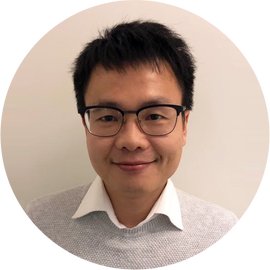
Wei Ouyang
Teacher / Examiner

Nils Mechtel
Teaching Assistant